Why you should be optimizing for Google Discover

Google Discover is the number one traffic source for a lot of news and media sites across the web, but it can be difficult to understand, hard to predict, and often underestimated.
Across the Raptive network, we see around one billion Google Discover clicks each year, and it’s a growing area of opportunity. Over the last year, Google has invested more in the platform, rolled out more features, and, on February 5, announced its first-ever Discover-focused core algorithm update.
So what is Google Discover, how do you optimize for it, and what are we doing to help creators and publishers get ahead?
What is Google Discover?
Google Discover is a recommended feed of personalized content—topics Google thinks you’re interested in based on your location and browsing history.
Discover is part of Chrome on mobile; Android users can swipe left from the home screen to access it immediately, and iPhone users can find it in the Google Search app.
Discover has been around since 2018 and has grown into a significant traffic source. Globally, it sends about twice as many clicks as search, due to widespread international Android usage. In the U.S., search and Discover drive equal amounts of traffic for news and media sites.
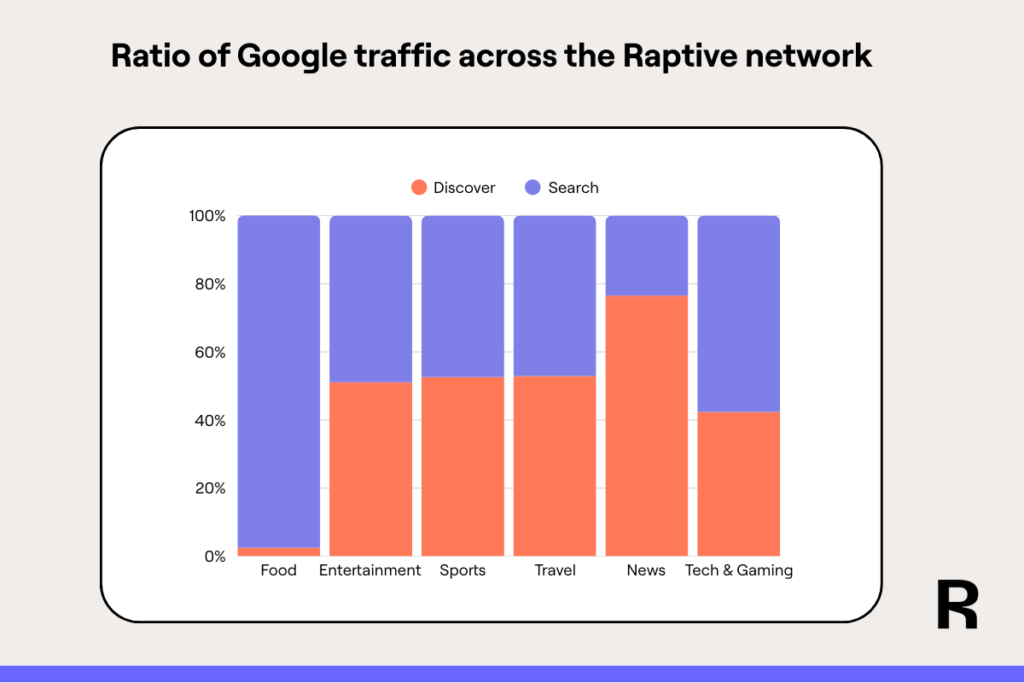
Across the Raptive network, some verticals tend to get much more Discover traffic than others. For tech, gaming, sports, and travel verticals, roughly 50% of Google traffic comes from Discover. For news, it’s 76% and for food, that number plummets to 2%.
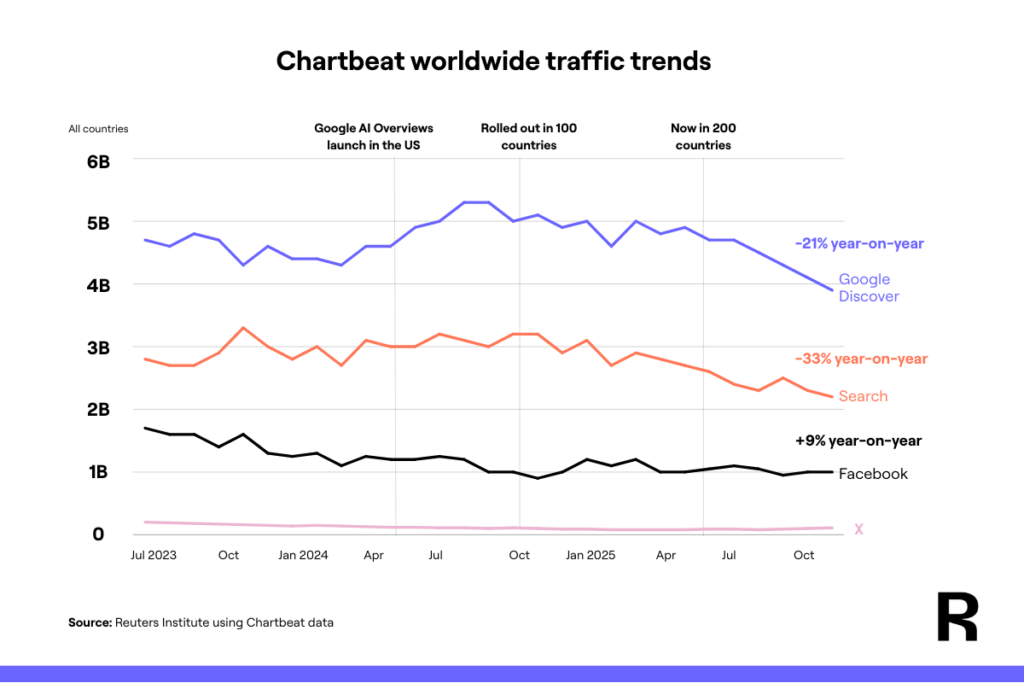
In the first half of 2025, industry reports showed that while search was declining under threat from AI Overviews, Discover traffic continued to grow. That changed in the second half of the year, when Discover started to decline as well.
While there has been a lot of volatility in Google Discover, we’ve been working on optimizing Google Discover performance across the Raptive network and we actually see strong growth. I attribute this, in part, to the 2025 August spam update, which shifted traffic from larger media sites to smaller, independent publishers and creators. It’s also partly due to our direct work with sites in our network to optimize performance.
Across the Raptive network, 2025 data was similar for sites outside of the food vertical: Google Discover traffic was down 4% year over year, but was up 5% in the second half of 2025.
What’s changing in Google Discover
As Google refines its approach and algorithms, the Discover feed has changed. Here are five factors impacting creators’ presence and distribution on the platform.
X saw a dramatic rise in November 2025
According to Newzdash data, X is now the fourth most popular domain on Google Discover behind YouTube, Yahoo, and CNN. This is similar to the rise of Reddit in Google Search; Google sees that people are seeking out first-person opinions and is surfacing content accordingly.
AI summaries now show up 51% of the time
In July 2025, Google announced that it would start testing AI summaries in Discover. We started seeing this around November, and Marfeel reports that AI summaries now make up 51% of the Discover feed.
August 2025 spam update destabilized Discover traffic
Google’s core and spam updates always shake the snow globe, but the August spam update in particular shuffled up Discover traffic for creators. For example, we spoke to a creator who went from 10 million clicks per month from Discover to under one million per month after the August update.
February 2026 Discover core update
On February 5th, 2026, Google announced its first-ever Discover core update. The goal is to show users more locally relevant content, reduce clickbait, and surface more quality content from trusted websites. We’ll analyze the results and will share our data and recommendations when available.
Personalized intelligence launched
Google launched personalized intelligence in Gemini and AI mode in January 2026. AI will radically reshape the Google Discover feed in ways we don’t yet know, and this could have positive and negative impacts for clicks and traffic.
How to optimize for Discover
It’s harder to break into Discover than search. Domain Authority (DA) and branded search volume both correlate very strongly with Discover and search, but in different ways.
While there’s a somewhat linear relationship between these authority signals and search—higher authority tends to translate into more search clicks—there’s a cliff with Discover, where sites without a certain level of authority won’t show up at all.
Optimizing for Google Discover comes down to three core elements.
1. Sitewide credibility
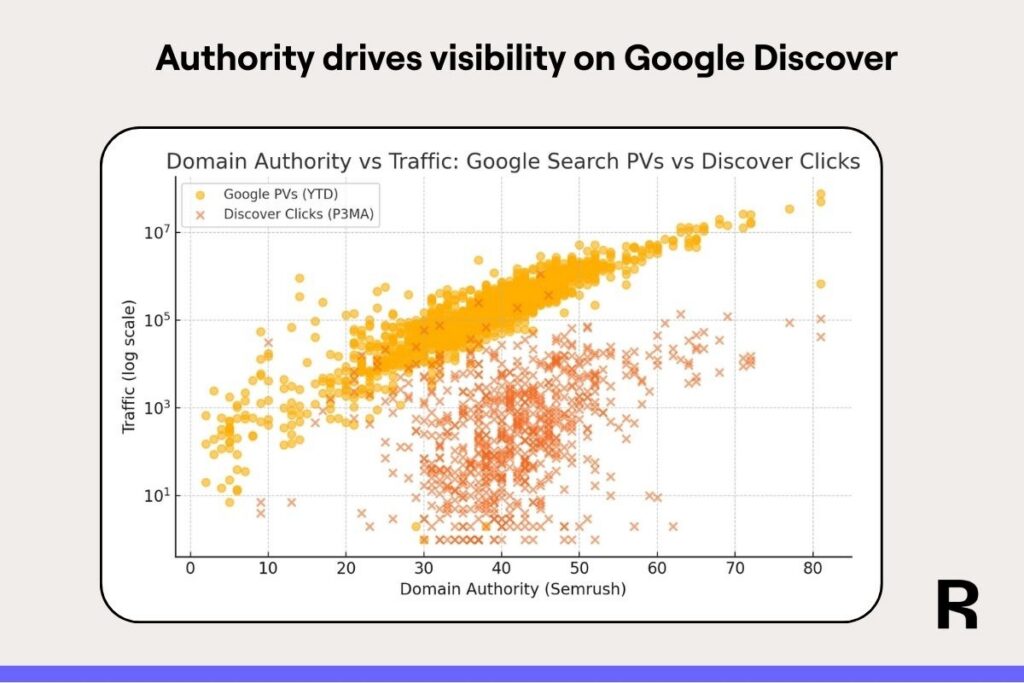
Google uses signals like DA and branded search volume to determine if a site is worth adding to its feed. To gain traction in Discover, your site must have strong authority, author entities, and branded search volume. This comes from high-quality back links, people searching your brand name, and establishing a reputation with Google.
2. Tech setup
Core Web Vitals, the metrics Google uses to determine site performance, play a strong role in Google Discover. Sites that are slow, unresponsive, or have a clunky tech setup will struggle to do well in Discover. To put your site in the best position, optimize your tech setup for speed and ensure you’re using the right meta tags.
3. Engagement metrics
Google Discover is all about timely content, and there’s a very short window of time between publishing a post and having it show up in Discover, usually within 12 hours. Pay attention to the days of the week when you see the most engagement, and publish when the demand is highest.
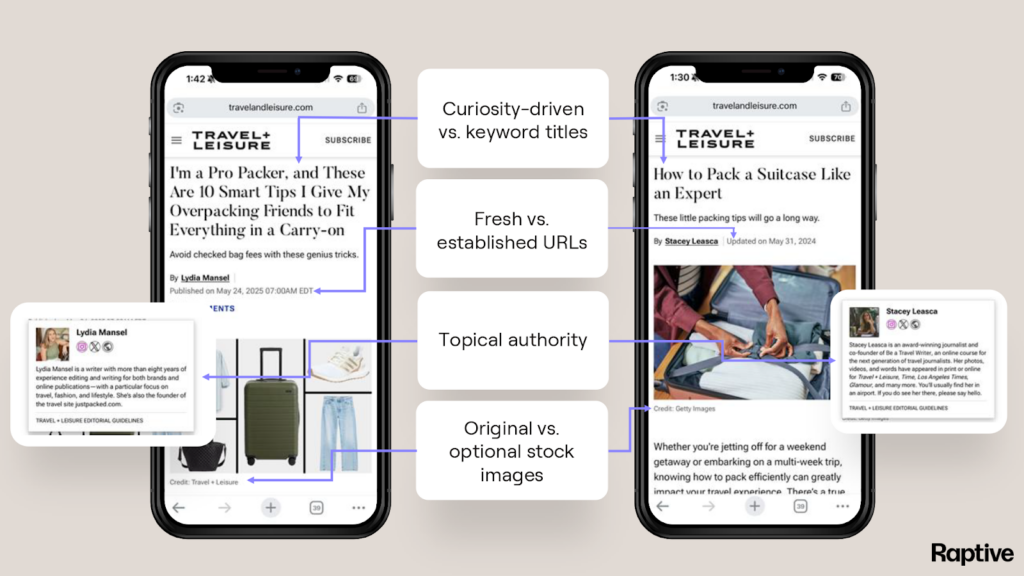
The combination of a post’s image and headline are critical in Discover. The title tag length is longer than in search, so you can be more creative and provide more information—but avoid clickbait.
How we’re helping creators break into Discover
Many creators and publishers with higher authority and branded search volumes have low-hanging fruit when it comes to Google Discover. We’ve started supporting eligible creators in making these optimizations and have been seeing great success. We’re also expanding our support for Discover within the Raptive network, with new tools and resources on the way.
Real-world wins
Here are some examples of what’s working for Discover:
- Meta tags: Changing a single meta tag led to 400% growth in Discover traffic
- Optimizing headlines: Writing longer, Discover-focused titles brought a food site from under 5K clicks a month to over 150K clicks a month
- Core Web Vitals: Fixing CWV issues drove a 200% increase in Discover traffic for one site
- Publishing roundups: Roundups brought a recipe site nine times as much Discover traffic as a regular recipe
- Day of the week: One site pivoted their strategy after realizing they only published 6% of their posts on Fridays, but those posts accounted for 22% of impressions
For more actionable insights, Raptive creators can access our exclusive resource, Unlocking the power of Google Discover, and check out our podcast episode on optimizing for Discover.
Our Google Discover Workbook is coming soon
We’re currently building a Google Discover Workbook inside the Raptive dashboard, with plans to start rolling it out later in 2026. This will provide a level of data analysis you can’t get anywhere else, including performance by day, by author, and a breakdown of top-performing posts.
We’ve also built a labs tool using AI internally that allows us to see a visual Google Discover feed for any site, which has been very useful for debugging issues. Connect your Google Search Console in your Raptive dashboard to get data in place so you can use these tools as early as possible.
Google Discover represents meaningful growth opportunities in a volatile landscape. Yes, it can be cryptic and hard to optimize for, but there are things many creators and publishers can do right now to bring in more traffic.
We’ll continue sharing more Google Discover resources, tools, and insights to help you grow, and encourage you to experiment to find out what works best for your site.
 `
`
 `
`
 `
`